
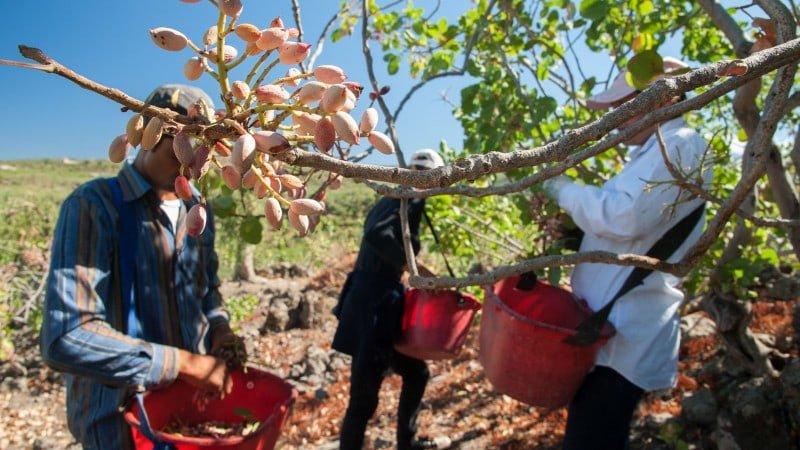
The characteristics of Badami pistachio:
Iran is one of the largest producers of pistachios in the world, that’s why the variety of pistachio cultivars in Iran is very high and nearly 70 varieties of pistachio have been identified and even cultivated in Iran.
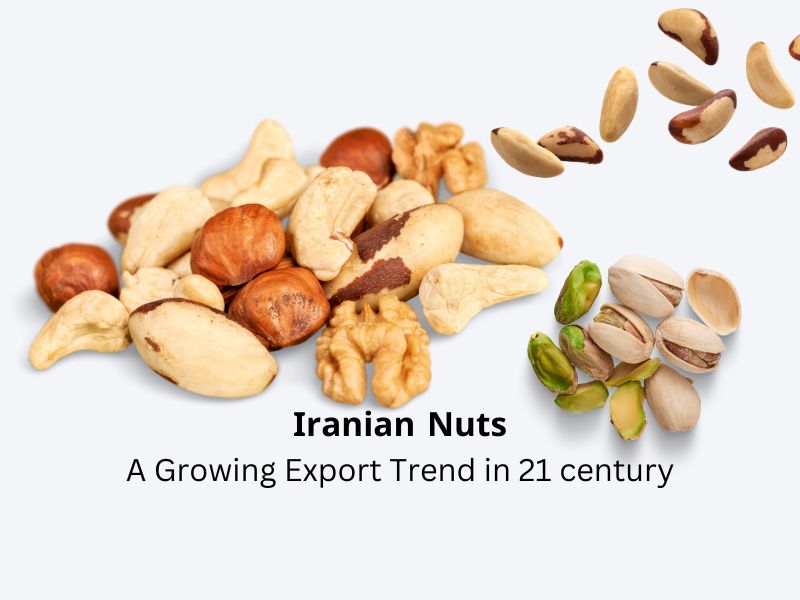
We can categorize the most famous Iranian pistachios into 3 groups; round, long, and jumbo. Each of these groups has its type. The round group has a famous type called Fandoghi; the long group has 3 famous types: Akbari, Ahmad Aghaei, and Badami. the jumbo group has a famous type which is called Kale Ghoochi.
- Akbari (Super Long Pistachio)
- Ahmad Aghaei (Long Pistachio)
- Fandoghi (Round Pistachio)
- Kalleh Ghoochi (Jumbo Pistachio)
- Badami (Semi-Long Pistachio)
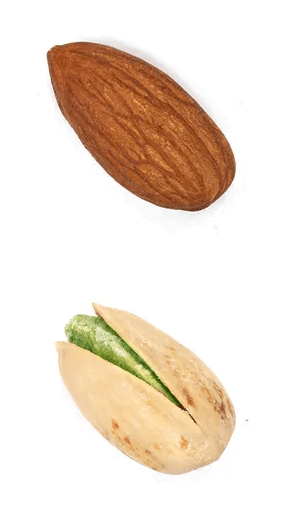
Semi-long pistachio or as it is called “Badami pistachio”, due to their resemblance to almond and their elongated shape and beauty, is considered one of the most popular pistachio to export to other countries.
Badami pistachios are exported to Russia, Afghanistan, and China at a significantly higher rate than other types of pistachios. The available size in the market is 26 to 36 ounces.
This variety of pistachio is one of the early flowering ones and since it can be harvested in the first half of August, it is one of the very early cultivars.
White Pistachios:
On the local market, Badami pistachio is also known as the White pistachio because of the color of its shell. This type is exported in large quantities to India, Russia, and Pakistan.
This variety of pistachio is primarily produced in the province of Khorasan Razavi in the east of Iran. The Mahvelat region and its suburbs are where the majority of this product is planted in large quantities. The volume of pistachio cultivation in this region is very high, so it is expected that Khorasan province will be the first pole of pistachio production in Iran in a few years.
Faiz Abad is the center of this region, and White pistachios are also known by the name of this city in the market. White pistachios are available from 26 to 36 ounces. And the quality of pistachio depends on its size, taste, and freshness. Their high-quality pistachio kernels also known as green belly pistachio kernels have reasonable prices. The low price and good green color of this product make it a great choice in the production of ice cream and sweets in powder form.
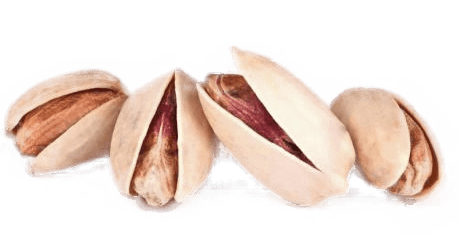
White pistachio is one of the cheapest types of Iranian pistachios in the market. This type of pistachio in Khorasan province has a high percentage of closed-mouth pistachios therefore, the loads with a lower percentage of closures and latches have a higher price.
To export White pistachios, the percentage of latches and closed-mouth pistachio must be 5 or less so they need to be sorted first. If the amount of latch in the load is high, its price is reduced and it is sold cheaper in the market.
Badami or white pistachio is used for export to different countries. This type of pistachio is often sent to countries that are looking to buy the product at a competitive and cheap price. Overall, Badami (Semi-long) and Fandoghi (round) pistachios are among the cheapest types of pistachios in the Iranian market.
The main buying countries of Iran’s white/Badami pistachios are:
- Russia
- Pakistan
- Uzbekistan
- Kazakhstan
- Ukraine
- India
- China
One of the best ways for buying White pistachios at a reasonable price is the pistachio collection terminals in Khorasan. Due to the high volume of pistachio production in Khorasan province, there are also many processing centers where you can buy pistachio at a good price and with high quality. Because of the proximity to this area, Afghan businessmen often visit in person and buy at these centers.
The price of Iranian pistachios directly depends on the rate of US dollar on a daily basis. The price of dried fruits and nuts, particularly pistachios, and their products, remains stable when the dollar rate fluctuates little.
Updated in 2024.01.08
Iran, renowned as one of the world’s leading producers of pistachios, offers a diverse range of pistachio cultivars, with nearly 70 varieties identified and cultivated. Among these, the Badami pistachio stands out for its unique characteristics and popularity in international markets.
Understanding the Variety: Badami Pistachio The Badami pistachio, known for its semi-long shape, closely resembles an almond. This aesthetic appeal and elongated form make it a sought-after choice for export. Predominantly exported to countries like Russia, Afghanistan, and China, Badami pistachios are prized for their size, which typically ranges from 26 to 36 ounces in the market.
Harvesting and Cultivation Insights As an early flowering variety, the Badami pistachio is harvested in the first half of August, making it one of the earliest cultivars to be available. This quick-to-market advantage boosts its appeal among pistachio enthusiasts.
Local and International Appeal In local markets, the Badami pistachio is often referred to as the White pistachio, owing to its shell color. This variety has garnered significant popularity in countries like India, Russia, and Pakistan. The primary production of this pistachio occurs in Khorasan Razavi province, Iran, particularly in the Mahvelat region. With extensive cultivation in this area, Khorasan is expected to become a leading hub for pistachio production in Iran.
Culinary Uses and Market Demand The Badami pistachio, also marketed under the name Faiz Abad White pistachio, is available in sizes ranging from 26 to 36 ounces. Its quality is assessed based on size, taste, and freshness. High-quality Badami pistachio kernels, also known as green belly pistachio kernels, are sought after for their affordability and vibrant green color, making them ideal for use in ice cream and sweets.
Market Dynamics and Export Insights As one of the most cost-effective types of Iranian pistachios, the Badami pistachio is particularly favored in markets where price competitiveness is key. The main international buyers include Russia, Pakistan, Uzbekistan, Kazakhstan, Ukraine, India, and China. For those looking to purchase White pistachios at reasonable prices, the pistachio collection terminals in Khorasan offer an excellent opportunity due to the region’s high production volume and numerous processing centers.
Economic Factors Influencing Price The pricing of Iranian pistachios, including the Badami variety, is directly influenced by the daily fluctuations of the US dollar rate. Stability in the dollar rate tends to maintain steadiness in the prices of dried fruits and nuts, particularly pistachios.
Nutritional Information of Badami Pistachios
| Nutrient | Amount per 100g |
|---|---|
| Calories | 557 kcal |
| Protein | 20.6 g |
| Total Fat | 44.44 g |
| Carbohydrates | 27.97 g |
| Dietary Fiber | 10.3 g |
| Sugars | 7.66 g |
| Vitamin B6 | 1.7 mg |
| Potassium | 1025 mg |
| Phosphorus | 485 mg |
| Magnesium | 121 mg |
FAQ
- What is unique about Badami pistachios?
- Badami pistachios are known for their semi-long shape, resembling almonds, and are popular for their aesthetic appeal and taste.
- Where are Badami pistachios primarily grown?
- They are predominantly grown in the Khorasan Razavi province of Iran, especially in the Mahvelat region.
- What are the primary uses of Badami pistachios?
- Badami pistachios are widely used in culinary applications, particularly in the production of ice creams and sweets, due to their flavor and vibrant green kernels.
- Which countries are major importers of Badami pistachios?
- Major importers include Russia, Pakistan, Uzbekistan, Kazakhstan, Ukraine, India, and China, with a focus on markets seeking high-quality pistachios at competitive prices.